Picture collage
HOME

IN EMERGENCY

SERVICES
SBS TIMELINE
CAMPAIGNS
CAMPAIGN SONGS
PUBLICATIONS
RESEARCH & BRIEFINGS
FAQs
MEDIA COVERAGE
SUPPORT SBS
FUNDERS
CONTACT US
 

CAMPAIGNS

Kiranjit Ahluwalia (1990-1992)
The One Year Rule campaign (current)
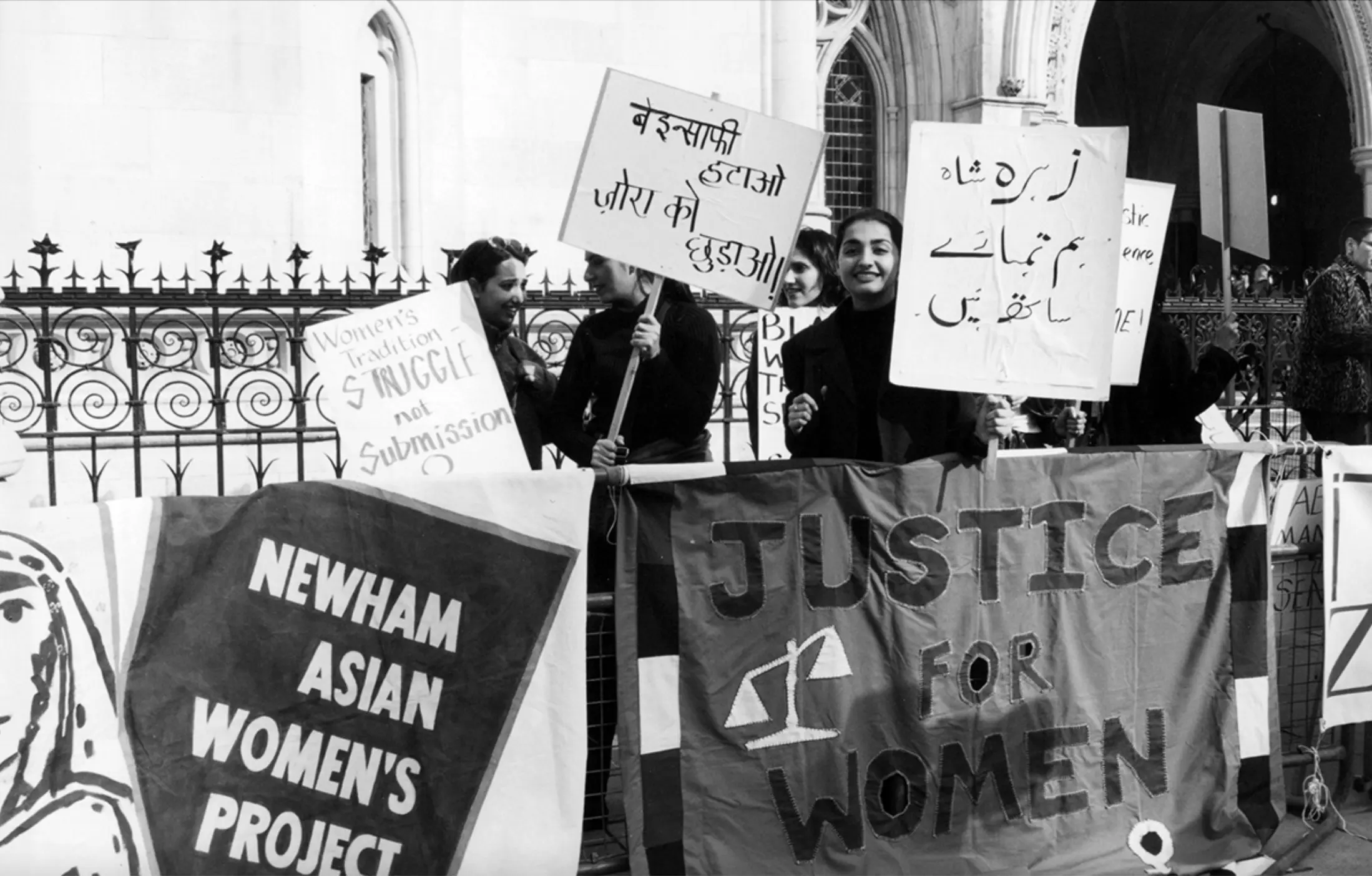
Zoora Shah (current)
The Forced Marriage campaign (current)
 

Kiranjit Ahluwalia

printable page

This was our first case in which we supported and campaigned on behalf of a battered woman who had killed her husband. (click on image to view full campaign poster)

Kiranjit Ahluwalia, an Asian woman, set fire to her husband Deepak in May 1989 after suffering his brutality for 10 years. She was charged with murder and imprisoned for life.Her tariff was 12 years. It was at the request of her probation officer that we initially got involved. At the time, she had been advised by the legal team who represented her at trial that there were no grounds for appeal. Initially we provided ancillary support - helping to transfer the custody of her two children from her mother-in-law to her sister.

We felt strongly that a miscarriage of justice had occurred. We sought the assistance of a lawyer, Rohit Sanghvi, who without the benefit of legal aid, agreed to support us through the arduous process of assessing whether there were any grounds for appeal. We embarked on a lengthy exercise of getting a detailed statement from her which we hoped would provide the fresh evidence on the basis of which we could lodge an appeal. Rohit Sanghvi also felt that the trial judge may have misdirected the jury on a section of the law. We were given leave to appeal in September 1991 on the basis of the misdirection ground. At the appeal in July 1992 which was presided over by the then Lord Chief Justice, Taylor, the defence argued both provocation and diminished responsibility, both partial defences to murder. Although the Appeal Court judges rejected provocation, they made a significant concession in the way in which provocation had been traditionally interpreted. They accepted the notion of cumulative provocation, which was an important plank in the defence of most battered women, and also accepted that the period of time which lapsed between an act of provocation and the defendant's response was not necessarily a cooling down period but could be seen as a boiling over period. However, Kiranjit won her appeal on the grounds of diminished responsibility. In the course of our investigation we had discovered a psychiatric report that had been commissioned by her original team but had not been produced at her trial. The report clearly stated that she had suffered from endogenous depression at the material time. A retrial was ordered. However, the Crown commissioned its own psychiatric reports and decided to accept her plea on the basis of diminished responsibility. Kiranjit Ahluwalia was released in September 1992, three years and three months after she had first entered prison to scenes of jubilation from the large number of supporters who had gathered outside the court.

Alongside the legal campaign, we had mobilised public opinion in our own communities and in the wider community through public meetings, pickets, demos and media coverage. Kiranjit became a household name. For us, it was also a high point of feminist activity in the nineties. This case received support from unexpected quarters within the community and did much to raise awareness of domestic violence and to understand the plight of women trapped in such situations.

'PROVOKED: The story of Kiranjit Ahluwalia' is now available as a book from Southall Black Sisters. It was previously published under the title 'Circle of Light', and has recently been made into a film.

Cost: £8.99. Postage and packaging £1.50 per copy.

Order PROVOKED

back to top


need help information
Office Hours:
Monday - Friday 10am - 5pm.


Please leave a message and contact number. We will return your call.